Cyclists and pedestrians have no crumple zone. Even a slow-speed impact can mean fractures, head injuries or long recovery. The claim that follows tends to center on two questions: who had the right of way, and whose insurance pays.
Right of way is the first argument
In most bike and pedestrian claims, the driver's insurer starts by questioning the injured person's conduct: were you in the crosswalk, was the signal in your favor, were you visible, were you riding with traffic? These questions matter because Colorado's modified comparative negligence rule reduces recovery by your share of fault and bars recovery from a party whose fault is smaller than yours.
Colorado traffic law gives cyclists most of the rights and duties of drivers, and gives pedestrians specific protections in crosswalks. Colorado also changed its law in 2022 to allow cyclists to treat some stop signs as yield signs and some red lights as stop signs, with conditions, and local rules can vary. Because these details shift and depend on location, ask a lawyer how the rules applied at your exact intersection.
Coverage that follows you off your car
A surprise for many people: your own auto policy may cover you even though you were not in your car. MedPay and uninsured/underinsured motorist coverage often apply to you as a pedestrian or cyclist struck by a vehicle. If you live with a relative who has a policy, that policy may also come into play. Health insurance, the driver's liability coverage and these policies can stack in a specific order.
| Source | When it may apply | Check this |
|---|---|---|
| Driver's liability insurance | Driver was at fault and insured | Policy limits are often low compared to serious injuries |
| Your UM / UIM | Driver uninsured, underinsured or unidentified | Whether you carry it, the limits, notice rules |
| Your MedPay | Medical bills regardless of fault | Whether it covers you as a pedestrian or cyclist |
| Health insurance | Your treatment | It may claim repayment from a settlement |
Evidence specific to these crashes
Bike and pedestrian crashes often happen at intersections and along busy corridors, which means cameras. Transit vehicles, businesses, apartment buildings and doorbell cameras may have captured the moment, but many systems overwrite footage within days or weeks. List every camera you can see and pass the list to whoever is helping you.
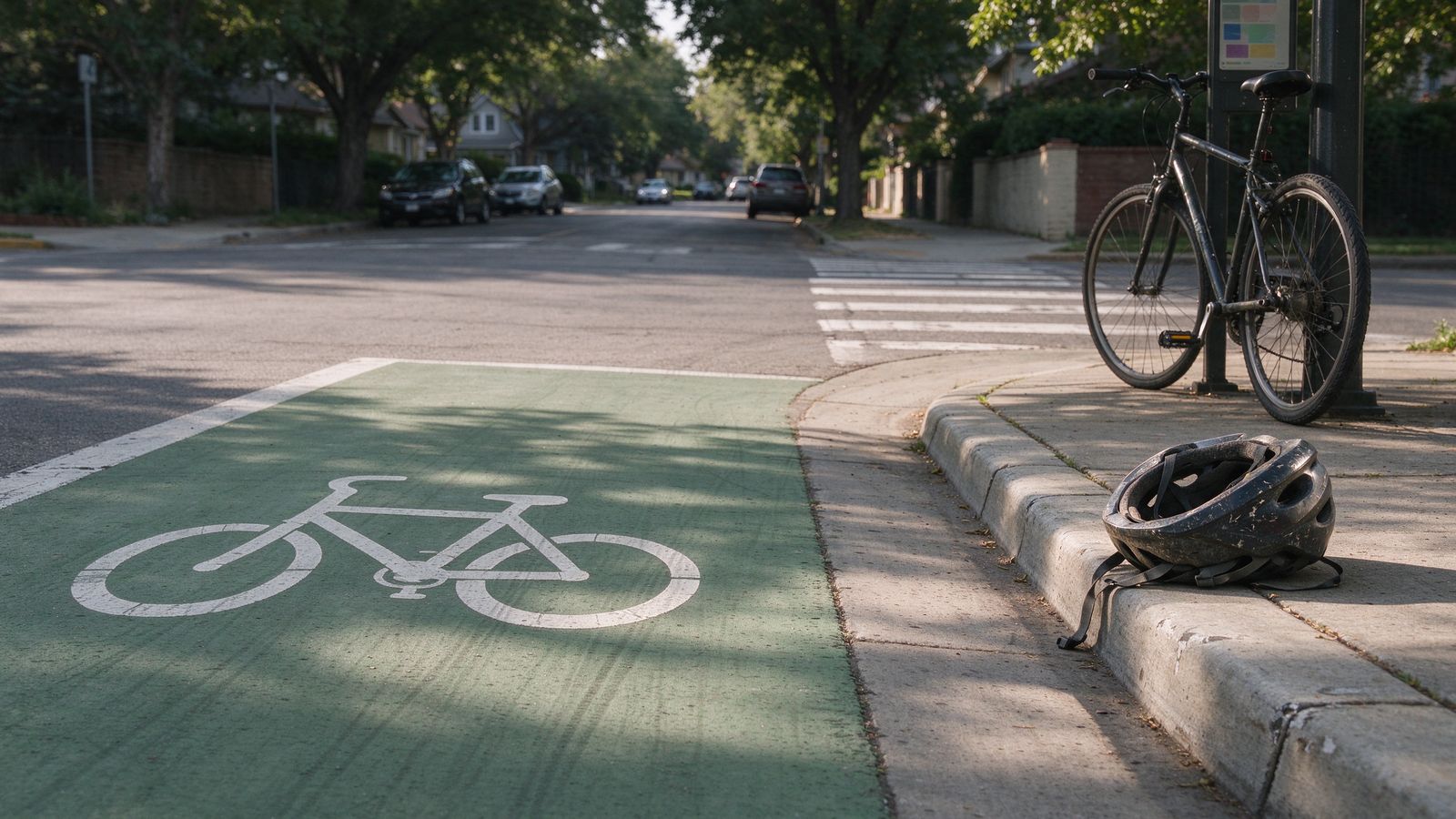
- Your bike, helmet and clothing in their damaged state. Do not repair or throw them away yet.
- Photos of lighting at the time of day the crash happened, if you can return safely, plus any obstructions such as parked vans or overgrown bushes.
- Signal timing and walk signal behavior at the intersection; a lawyer can request the city's records.
- Names of witnesses, including other riders and bus drivers.
- the driver stopped and admitted they did not see you
- write down their exact words with the time; tell the police officer as well.
- the driver drove away
- report it as a hit-and-run immediately and check your UM coverage's notice requirements.
- you were hit by a city bus or government vehicle
- talk to a lawyer quickly; claims against public entities can require written notice on a short timeline under the Colorado Governmental Immunity Act.
Injuries and the long tail of recovery
Head injuries, shoulder and collarbone fractures, wrist injuries from bracing, and knee and hip injuries are common. Many take months to heal and some leave lasting limits. Because the value of a claim depends heavily on the full course of treatment, settling before you know your prognosis carries real risk. A release usually ends the claim for good.
Practical steps for riders and walkers
If you are able, take the same steps as in any crash: get care, photograph everything, collect names and report it. Then preserve your gear and devices, list cameras, and pull your own auto policy declarations page. Our first-week checklist walks through each of these steps.
Expect a right-of-way argument, preserve your gear and camera files, and check your own auto policy for coverage that follows you. Confirm the rules for your location with a licensed Colorado attorney.