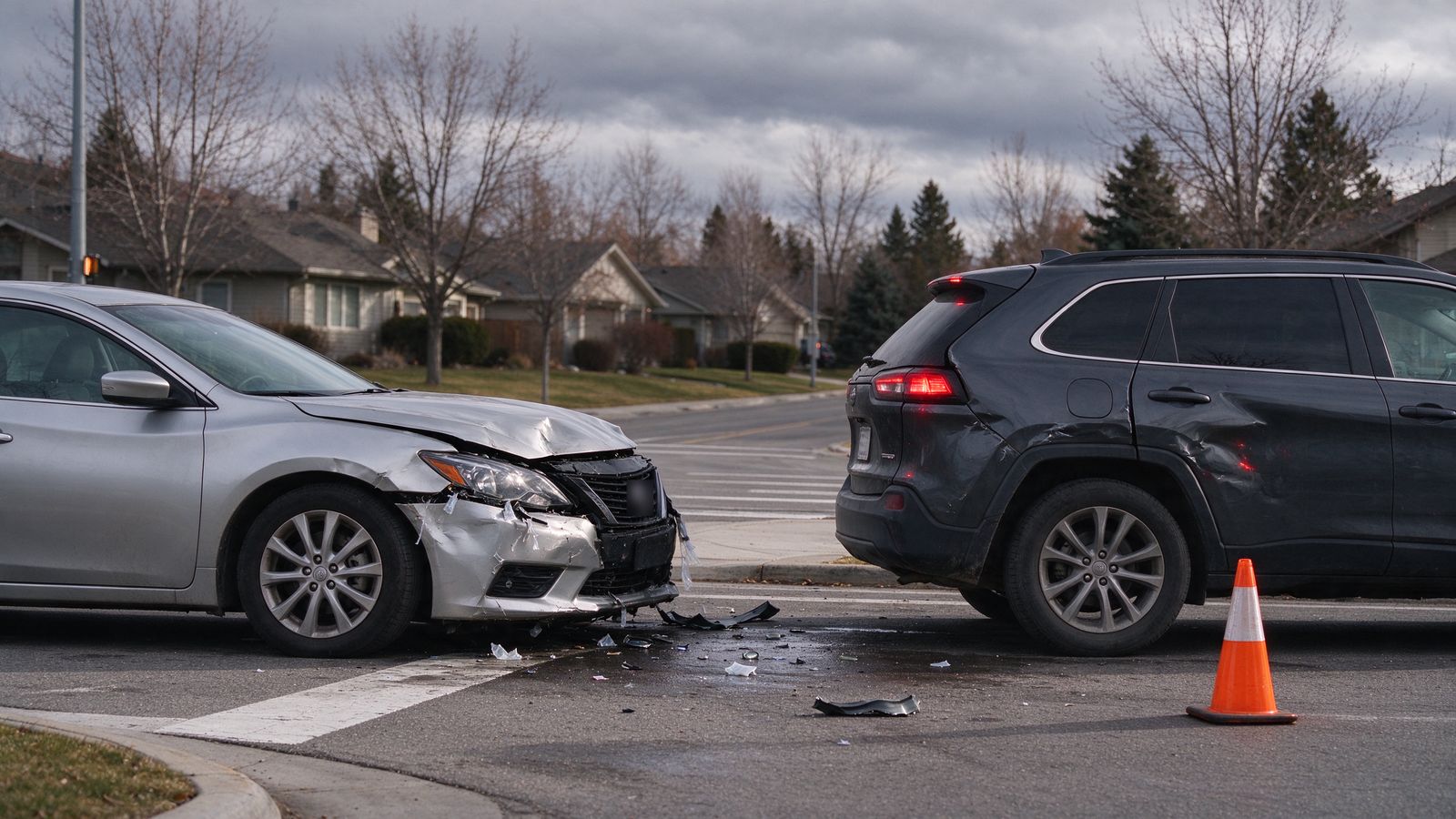
Comparative negligence: fault is shared, not assigned to one side
Colorado uses a modified comparative negligence rule found in C.R.S. 13-21-111. In plain terms: if a case reaches a jury, the jury decides what percentage of the fault belongs to each person. Your damages are reduced by your own percentage. And if your share of fault is as great as or greater than the share of the party you are suing, you recover nothing from that party.
So 20% at fault generally means an award is reduced by 20%. At 50%, against one other party with 50%, recovery from that party is barred. The illustration on our home page shows the arithmetic with a slider.
| Your share of fault | Other party's share | General result |
|---|---|---|
| 0% | 100% | Full award, subject to any caps |
| 25% | 75% | Award reduced by 25% |
| 49% | 51% | Award reduced by 49% |
| 50% | 50% | Recovery from that party barred |
Where it shows up long before a jury
Very few injury claims go to trial, but the rule shapes every negotiation. An adjuster who can argue you were 30% at fault will discount an offer by roughly that much. That is why seemingly small facts, such as a phone in hand, a few miles over the limit, or dark clothing at night, get so much attention. Evidence that answers them protects the value of the claim.
Several parties, several percentages
When more than one person or company may share fault, Colorado's pro rata liability statute (C.R.S. 13-21-111.5) generally limits each defendant to its own share. Defendants can also ask a jury to assign fault to someone who is not in the case, called a designated non-party, which has its own deadlines and procedures. This is technical territory where the advice of a lawyer is worth having.
Deadlines: the statute of limitations and notice rules
A statute of limitations is the deadline to file a lawsuit. If it passes, the claim is usually lost, regardless of its merits. Settlement talks with an insurer do not normally pause it. Colorado's general limitation statutes for injury claims are C.R.S. 13-80-101 and 13-80-102.
| Situation | Where to look | How it is commonly described |
|---|---|---|
| Many motor vehicle injury claims | C.R.S. 13-80-101 | Often described as three years; verify |
| Many other injury claims (falls, bites) | C.R.S. 13-80-102 | Often described as two years; verify |
| Claims against a public entity or employee | C.R.S. 24-10-109 | Written notice generally within 182 days of discovering the injury |
| Injured minors and people under a disability | C.R.S. 13-81-103 | Special rules may change timing |
These descriptions are deliberately hedged. The type of claim, the type of defendant, when the injury was discovered and the age of the injured person can all change the answer, and one incident can involve more than one deadline.
Damages caps, in general terms
Colorado limits some categories of damages. C.R.S. 13-21-102.5 caps non-economic damages in many personal injury cases, and the legislature raised those caps in 2024 for claims arising after a specified date, with adjustments over time. Other caps can apply to claims against public entities and in medical cases. Because the numbers and effective dates matter, get them from a lawyer for your specific claim. The damages guide explains what the categories mean.
- a government vehicle, road or building may be involved
- talk to a lawyer this week about the notice requirement.
- the insurer suggests you were partly at fault
- ask what evidence supports that, and gather evidence that answers it.
- the injured person is a child
- ask a lawyer how the deadlines and settlement approval rules for minors apply.
Fault is shared by percentage, and a share as large as the other side's bars recovery from them. Deadlines vary by claim and defendant, and the government notice deadline is the easiest to miss. Verify every date with a licensed Colorado attorney.