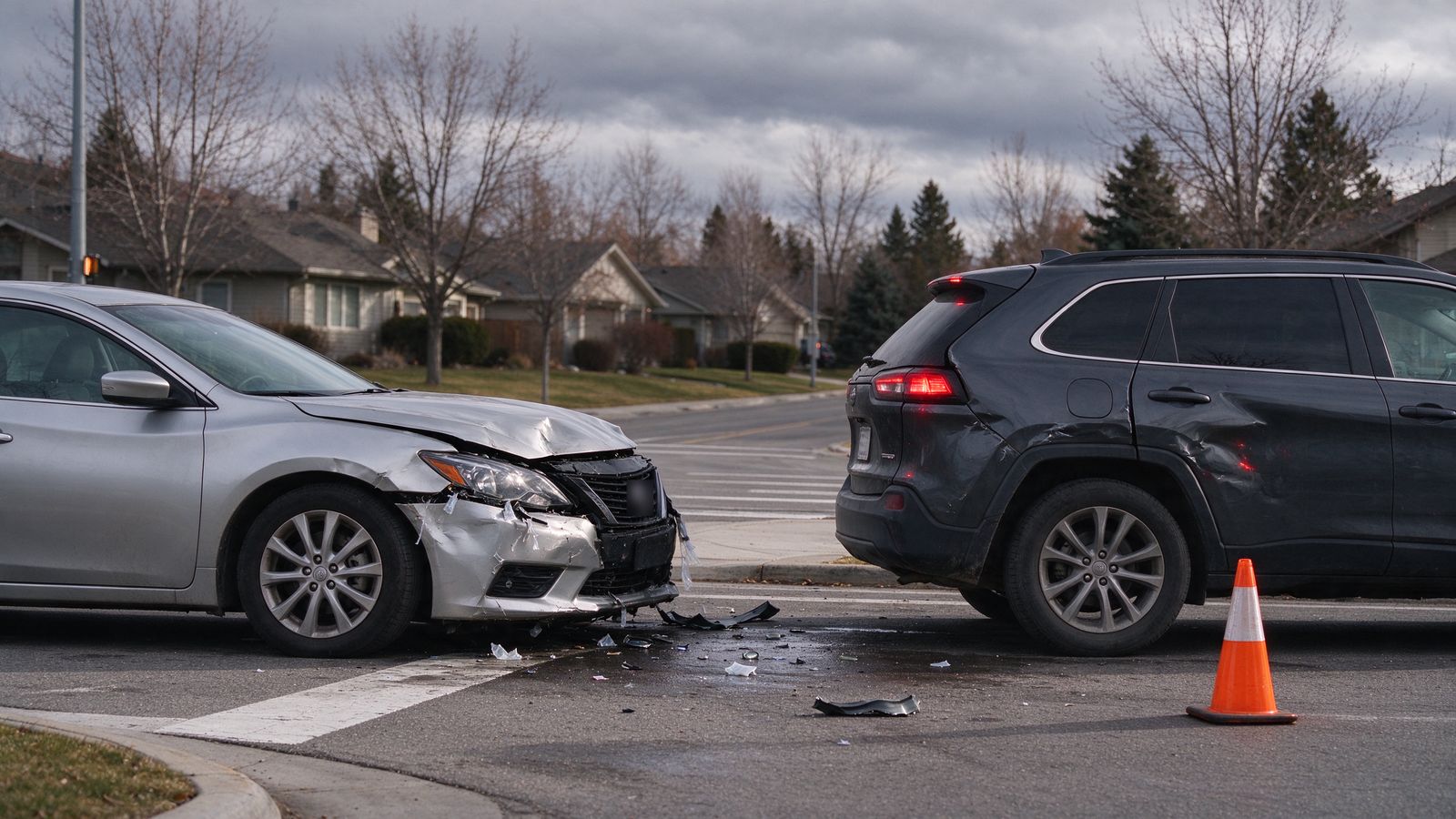
Vehicle crashes are the most common source of injury claims, and they follow a fairly predictable path. Truck crashes follow the same path with more parties, more rules and much more data. This guide covers both, in that order.
How fault and insurance fit together in Colorado
Colorado is an at-fault state. In general, the driver who caused the crash is responsible for the losses it caused, and that driver's liability insurer handles the claim. Your own policy sits behind that: collision coverage for your car, MedPay if you carry it, and uninsured or underinsured motorist coverage (UM/UIM) if the other driver has no insurance or too little.
Fault is rarely all or nothing. Colorado's modified comparative negligence rule (C.R.S. 13-21-111) reduces an award by your share of fault and bars recovery from a party whose fault is smaller than yours. Adjusters know this and often raise small points (a few miles over the limit, a late brake) to shift percentages. Our fault and deadlines guide explains the rule in more depth.
| Coverage | Whose policy | What it generally covers |
|---|---|---|
| Bodily injury liability | At-fault driver | Other people's injuries caused by that driver, up to the limit |
| Property damage liability | At-fault driver | Other people's vehicles and property |
| MedPay | Yours, if purchased | Your medical bills regardless of fault, up to the limit |
| UM / UIM | Yours, if not rejected in writing | Your losses when the at-fault driver is uninsured or underinsured |
| Collision | Yours, if purchased | Your own vehicle, minus the deductible |
Common car crash patterns and how fault is argued
Rear-end collisions
The trailing driver is usually presumed to have followed too closely or not paid attention, but not always. Sudden lane changes, broken brake lights and chain reactions can shift the picture. Photos of where the cars came to rest help.
Left turns and intersections
Disputes often come down to signal timing and who had the right of way. Traffic camera footage, signal timing records and independent witnesses carry weight. Denver intersections with heavy turning traffic produce many of these disputes.
Lane changes and merges
Highway merges, especially near interchange ramps, generate he-said-she-said claims. Dashcam footage, vehicle damage location and paint transfer can show the angle of contact.
Truck crashes: more parties, more records
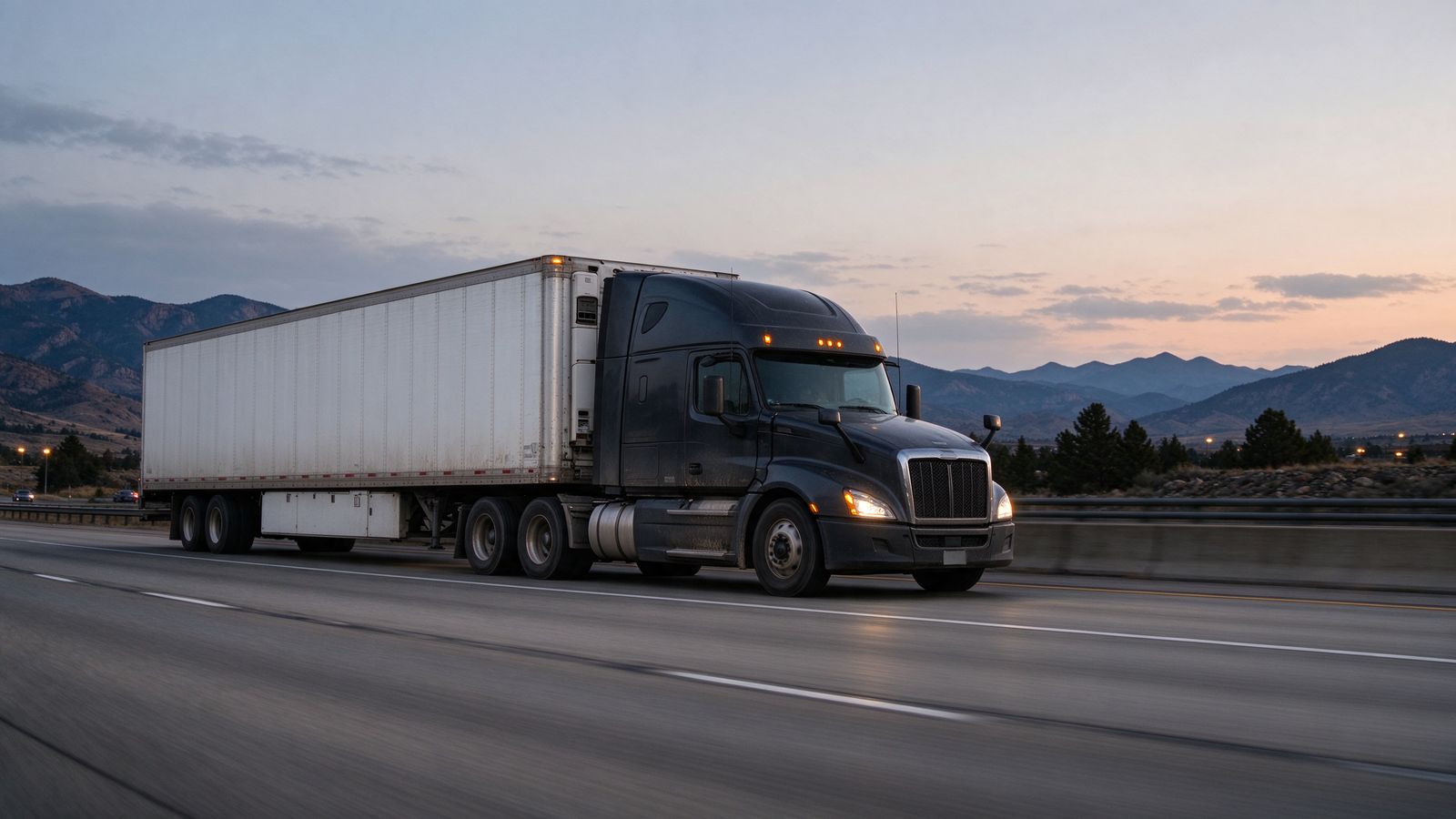
A collision with a semi, box truck or delivery van can look like a car crash with a bigger vehicle. Legally, it often is not. Commercial carriers operating in interstate commerce are subject to Federal Motor Carrier Safety Administration rules, including hours-of-service limits (49 CFR Part 395), driver qualification files, drug and alcohol testing, and inspection and maintenance records. Colorado adopts many of these rules for intrastate carriers too.
Those rules create records, and the records can matter: electronic logging device data, engine control module data on speed and braking, dispatch messages, maintenance logs and the driver's qualification file. Some of that data can be overwritten or discarded in the ordinary course of business. Lawyers typically send a preservation letter early asking the carrier to keep it.
- the truck had a company name on the door or trailer
- photograph it, along with the USDOT number, which identifies the carrier in federal records.
- the driver says another company loaded the trailer
- note it; cargo loading and securement can be a separate source of responsibility.
- the crash involved a rental or leased truck
- more than one company and insurer may be involved; keep every name you are given.
Injuries that show up after the crash
Whiplash and other soft-tissue injuries, concussions and some back injuries can take a day or more to show symptoms. Insurers are skeptical of these claims, which is why prompt evaluation and consistent treatment notes matter. Truck crashes, because of the weight involved, are more likely to cause fractures, spinal injuries and traumatic brain injuries, which can mean long treatment and larger, more contested claims.
The repair shop, the rental and the property claim
Your vehicle claim usually moves faster than the injury claim and is handled separately. You can generally choose your own repair shop. If the car is declared a total loss, the valuation is negotiable; look up comparable vehicles for sale in the Denver area. Settling the property damage claim does not normally settle the injury claim, but read anything you sign carefully to make sure it is limited to property damage.
Know your own policy, document fault evidence early, and treat a truck crash as a records case from the first day. A Colorado attorney can tell you which parties and coverages apply to your crash.